What are the main types of magnetic separators
Jun 23, 2025
Magnetic separators are engineered to solve contamination challenges across diverse industries. The optimal type depends on your material form (dry/wet), particle size, process flow, and contaminant sensitivity. Below are the core designs used in global industrial settings:
| Type | Operating Principle | Best For | Key Industries | Magnet Strength |
|---|---|---|---|---|
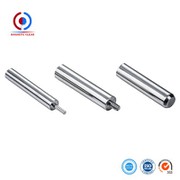
| 1. Magnetic Rods | Ferrous particles captured on tubes surface | Liquids, slurries, fine powders | Food, Pharma, Chemicals | 8,000–12,000 Gauss |
| 2. Magnetic Grids/Grates | Contaminants trapped at rod intersections | Gravity-fed granules, powders | Plastics, Grain, Sugar | 9,000–14,000 Gauss |
| 3. Magnetic Pulleys | Replace conveyor head; lift & discharge metal | Bulk solids on fast conveyors | Mining, Recycling, Aggregates | 5,500–8,500 Gauss (surface) |
| 4. Magnetic Drums | External rotating shell; captured metal scraped off | Wet/dry bulk materials, minerals | Ceramics, Glass Sand, Foundries | 6,000–10,000 Gauss |
| 5. Plate Magnets | Ferrous fines adhere to suspended plates | Free-flowing powders in chutes/hoppers | Milling, Spices, Feed | 7,000–10,000 Gauss |
| 6. Suspended Magnets | Overhead crossbelt/overband; remove large tramp metal | Conveyors with deep material beds | Scrap Yards, Waste, Coal | Electromagnetic > 15,000G |
| 7. Pipeline Separators | Encased magnetic rods in sanitary housings | Inline liquid/paste processing | Dairy, Edible Oil, Cosmetics | 12,000 Gauss+ (FDA grade) |
| 8. Eddy Current Separators | Repel non-ferrous metals with alternating magnetic fields | Recycling (copper, aluminum, zinc) | e-Waste, Auto Shredding | Rare earth magnets |
Key Design Variations
▶︎ By Magnet Technology:
Permanent Magnet Separators:
Use NdFeB (cost-effective strength) or SmCo (heat/corrosion resistance).
Ideal for: Food processing, hazardous environments, energy-free operation.
Electromagnetic Separators:
Adjustable field strength via electric current.
Ideal for: Scrap recovery, high-temperature bulk handling (>350°C).
▶︎ By Cleaning Method:
Manual Clean: Rods/grids/plates (periodic downtime).
Self-Cleaning: Drums/pulleys (continuous operation).
Quick-Release: Sanitary designs for fast maintenance.
Critical Selection Factors
Material State
Liquids/Slurries → Tube Magnets | Pipeline Housings
Dry Powders → Grid Magnets | Plate Magnets
Bulk Solids → Pulleys | Suspended Magnets
Particle Size
Fine dust (<500µm) → High-Gauss Neodymium Rods (8-12mm rod diameter)
Large scrap (>25mm) → Crossbelt Magnets
Capacity
High-throughput lines → Self-Cleaning Drums or Magnetic Pulleys
Harsh Conditions
High temp (>180°C) → SmCo Magnets
Corrosive media → 316L stainless housings